Managing Carbon & Advancing Energy Solutions
Advancing nature-based solutions and energy innovation for a lower-carbon Gulf of Maine.
Blue carbon habitats and marine energy projects offer significant potential for the region, but realizing those benefits depends on getting the science and community engagement right. We’re working to ensure that natural carbon sequestration and energy transition projects deliver lasting value for ecosystems, economies, and the communities that depend on them.
By 2030, we aim to achieve:
-
Ecological monitoring informing 100% of the offshore wind research array area delivers best available science to energy transition and community engagement.
-
Quantify Gulf of Maine carbon sequestration potential, supporting at least 3 conservation, management, policy, or restoration efforts with measurable ecosystem health benefits.
-
Reduce energy use, operating costs, and emissions in at least 5 vessels and 10 waterfront properties through efficiency, electrification, and/or alternative fuel adoption.
Carbon & Energy Solutions Work
Through this initiative we're conducting collaborative research and building community partnerships to advance a lower-carbon future in the Gulf of Maine. We’re quantifying carbon sequestration potential, supporting decarbonization in the marine economy, and ensuring energy transition projects are grounded in science and community engagement. Explore our progress so far.
-
![Forage Fish and the Ocean Carbon Cycle]()
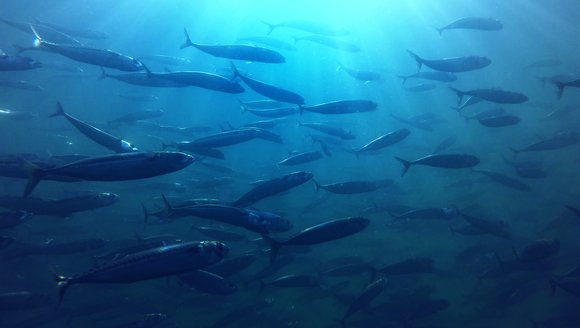
Forage Fish and the Ocean Carbon Cycle
We working to better understand the role of fish populations in regulating carbon and nutrient cycles at local and global scales.
-
![Exploring Fishing Operations in Simulated Virtual Floating Offshore Wind Environments]()
Exploring Fishing Operations in Simulated Virtual Floating Offshore Wind Environments
By leveraging a state-of-the-art maritime simulator with fishermen to test fishing gear around virtual floating offshore wind arrays, this work expands our efforts in advancing …
-
![Zooplankton and the Biological Carbon Pump]()
Zooplankton and the Biological Carbon Pump
We aim to quantify the importance of diapausing copepods to the global biological carbon pump, and its consequences for the Earth’s climate.

Read More
-
Carbon Sequestration 101
Earth's natural carbon sinks have already absorbed about half of all the CO₂ humans have ever emitted—but how does it actually work? Get the essentials …
Explainers
-
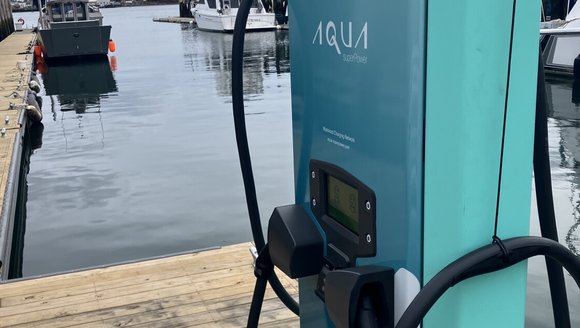
First public electric boat charger installed in Portland
Supporters hope the fast charger can help accelerate the transition away from fossil fuel engine in some of Maine's marine industries.
Press Clips
-
Gulf of Maine Research Institute opens public electric vehicle charging station on Portland's Waterfront
PORTLAND — The Gulf of Maine Research Institute announced the opening of 10 level-two electric vehicle chargers for public use at its parking lot at …
Press Clips
-
Collaborative Solutions: Port Visits Support Engagement in Offshore Wind
Offshore wind development in the Gulf of Maine is a complex and rapidly-changing issue. Explore our early impact on the ongoing process, providing independent, science-based …
Perspectives