Broadening Access to Computer Science in Middle Schools
Leveraging lived experiences and hybrid language practices for computational sensemaking.
This project aims to develop a teacher professional learning community centered on the integration of computer science with regular middle school math and science instruction. Over two years, researchers and practitioners will collaborate to identify pedagogical strategies that highlight the reflexive nature of computing with math and science. They will also co-design integrated learning sequences that capitalize on students’ lived experiences, as well as utilize hybrid language practices to support all students, regardless of their proficiency with English, to be successful in science, math, and computer science learning.
Project Goals:
- Contextualize integrated computing, math, and science learning in students’ lived experiences to make it personal and relevant.
- Identify design supports that enable multilingual students to draw on their hybrid language practices to support computing-math-science learning.
- Study teachers’ developmental trajectories as co-designers and practitioners of integrated math-science-computing instruction.
This project examines computing in the math and science classroom from the perspective of classroom teachers and multilingual students over the course of two years though integrated learning sequences and a Professional Learning Community (PLC) for teachers. Learning sequences will be carefully designed to support student engagement in modeling practices in order to examine and explain phenomena. Lessons include strategies for positioning ELL students as linguistically competent and have built-in scaffolds to support them in leveraging their hybrid language practices for learning. The PLC will provide a space for teachers to experiment with and reflect on their pedagogical practices as they enact co-designed modules in their own class. The project seeks to shed light on capacity building around computing for teachers, support hybrid language practices in the classroom, and illustrate how the integration of computing, math, and science supports the development of STEM identities.
Project Team
-
![]()
-
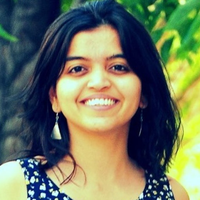
![This is a portrait of a woman smiling.]()
Aditi Wagh, Ph.D.
Research Scientist
Massachusetts Institute of Technology
-
![This is a portrait of a woman smiling.]()
Jen LaBonte
Instructional Specialist for Math and Science
Lewiston Public Schools

Project Sponsor

This project is generously sponsored by the National Science Foundation (NSF), award #2122672.
Project Partners
Read Next
-
Starting a Climate Committee: A Personal Guide
In 2024, while living in Woolwich, Dave Berndtson launched the town’s first climate resilience committee. He’s now a resident of Arrowsic (and a member of …
Perspectives
-
What does climate readiness look like for Maine’s towns?
Climate readiness looks different in every community, with each facing its own unique risks, priorities, and visions for the future. Through sustained relationships, place-based data, …
Perspectives
-
2025 Gulf of Maine Temperature Report
Over the past decade, our scientists have led a body of research that highlights temperatures in the Gulf of Maine. To keep you informed, we …
Reports
-
Atlantic Meridional Overturning Circulation (AMOC) 101
This 101 explainer breaks down what the AMOC is, how it influences climate, what scientists are observing now, and what a changing AMOC could mean …
Explainers