From Apprentice to Manager and Mentor: Kat Lipp’s Full-Circle Journey in Maine Aquaculture
Perspectives | May 28, 2026
Mere Point Oyster Company General Manager Kat Lipp got her foot in the door of Maine’s aquaculture industry through our Aquaculture Apprenticeship Program. Today, she mentors incoming apprentices herself. We spoke with Kat about her journey from being a girl in Ohio to a leader in Maine’s growing aquaculture industry.
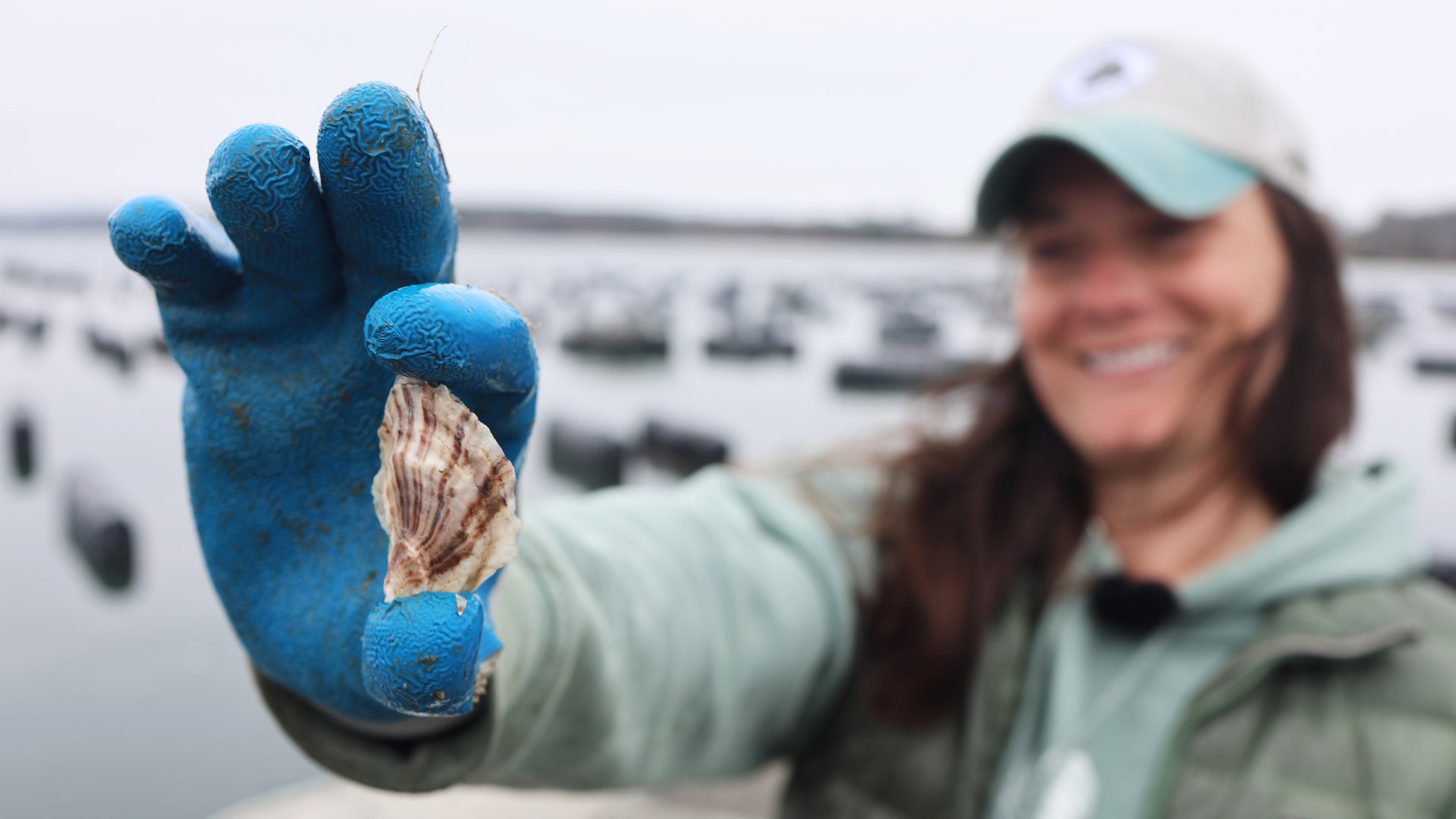
“I’ve always been drawn to water.”
It’s not a statement you might immediately associate with someone who grew up just outside of Cleveland, but for Mere Point Oyster Company General Manager Kat Lipp, the coast has always been calling her.
Her desire to work on the water first led her from Chagrin Falls, Ohio to Alaska, where she worked as a Federal Fisheries Observer and netted sockeye in her free time. “I lived out of a duffel bag,” she said. “I got hooked on seafood and the communities that support it while I was out there in Alaska.”
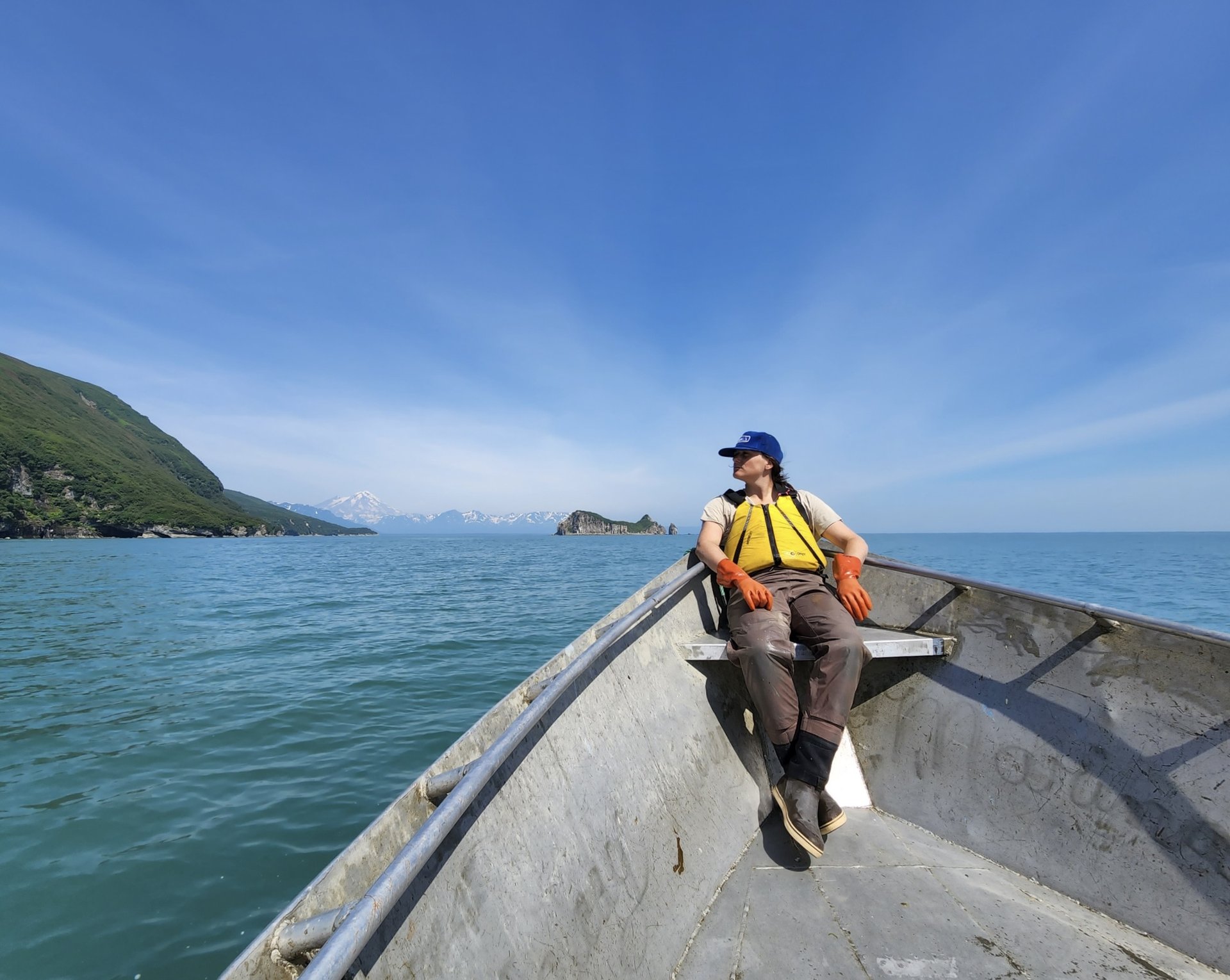
But by her 30s, she was ready for something closer to where she spent time as a child. With family ties to a getaway on Damariscotta Lake, she decided to make the move east and to continue working in an industry she had grown passionate about.
When she came across our Aquaculture Apprenticeship Program, the first of its kind in the country, it stood out to her as an accessible opportunity to get involved in the region’s seafood industry.
“The barrier to entry is much lower in aquaculture,” she said. “And I realized there’s a lot more to the seafood industry than just wild fisheries.”
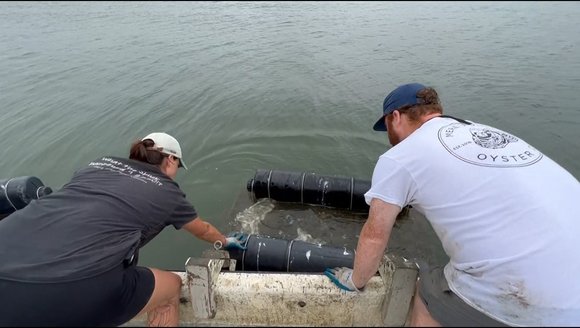
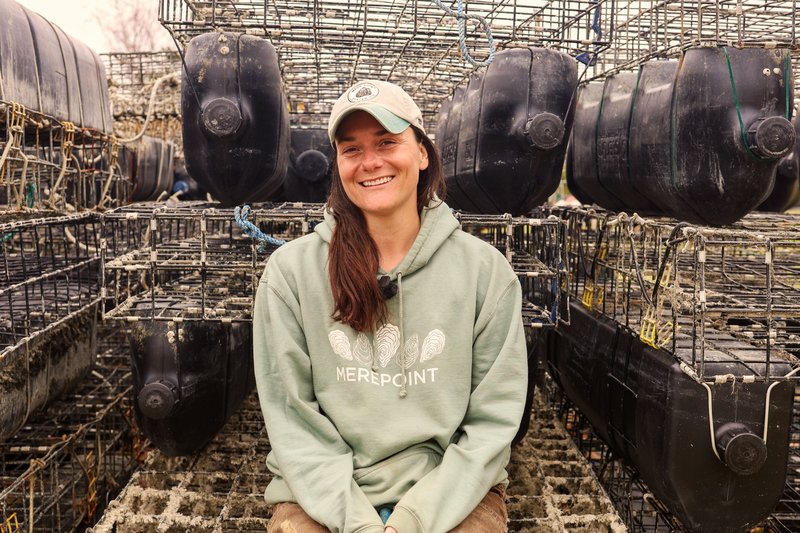
Covered in mud and smiling, Kat told us about her journey through the apprenticeship to where she was now — which was currently sitting on a muddy oyster cage in a spot that will soon be a new processing facility for Mere Point Oysters’ growing business, a business that she now helps run.
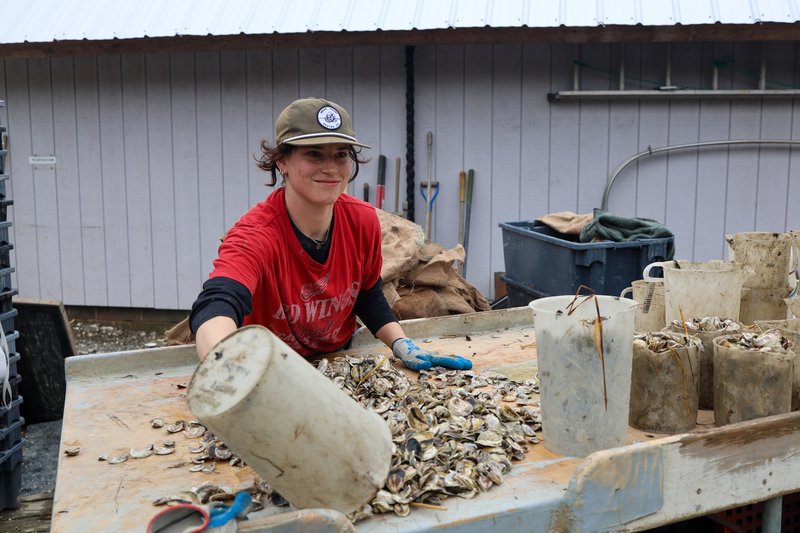
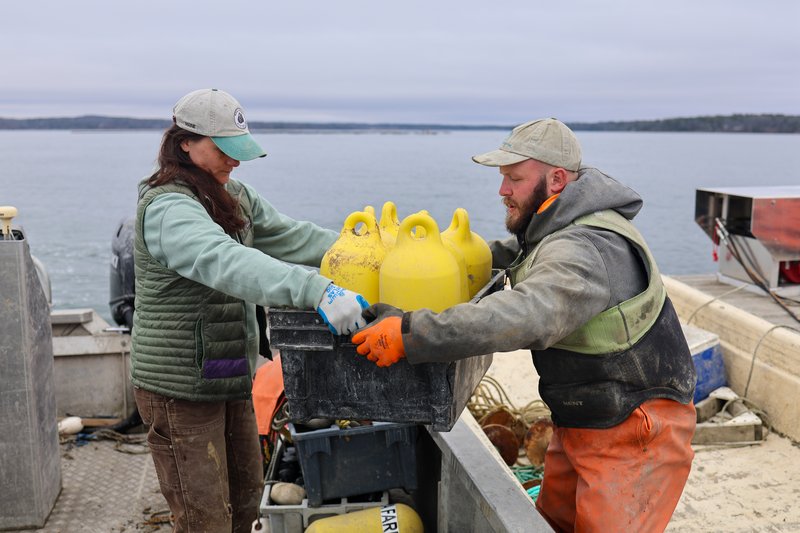
But just three years ago, Kat was rolling up to the oyster farm on Maquoit Bay as an apprentice, with no experience in the field of aquaculture, and a swell of uncertainty around how the country’s first aquaculture apprenticeship of this kind would play out.
“I was a bit nervous. I mean, we were the guinea pigs,” Kat said. “The apprenticeship was the first of its kind. I normally ask people who have gone through programs before what they are like, but we didn't have anybody to ask. So it took a lot of trust and faith.”
Kat was putting her trust in people like GMRI Aquaculture Program Manager Carissa Maurin, who she described as the backbone of the program, along with partners from Maine Aquaculture Association, the Department of Marine Resources, Educate Maine, and the Maine Department of Labor. And as it turned out, for Kat the trust was well placed.
“A lot of thought and care went into building this program,” said Carissa. “We wanted to ensure it truly supports apprentices in meaningful ways while also strengthening the farms and contributing to the future of the aquaculture industry as a whole.”
The program’s structure, and the support the organizers put behind it, gave apprentices a broader understanding of the industry than a typical entry-level role.
“If I just entered the industry as a regular farm hand, I wouldn't be thinking about the industry as a whole. The apprenticeship program puts things into perspective a lot more holistically by including the academic side of things.”
Kat Lipp General Manager Mere Point Oyster Company
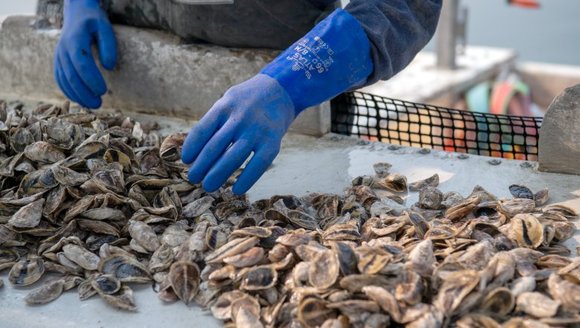
The program combines full-time, paid work on a host farm with structured training. Over the course of about a year, apprentices log thousands of hours on the water. They learn everything from gear and boat operations to shellfish health and food safety while also completing classroom coursework that builds a broader understanding of the industry and the science behind aquaculture.
Making your way through the requirements to graduate from this apprenticeship program is no small feat, but Kat had both the ambition and the motivation to succeed as the only woman in the first apprenticeship cohort.
“When I realized that I could make graduating first a reality, that I was going to be the first apprentice to reach the graduation requirements, and as the only woman in my cohort, my competitive nature sort of kicked in.”
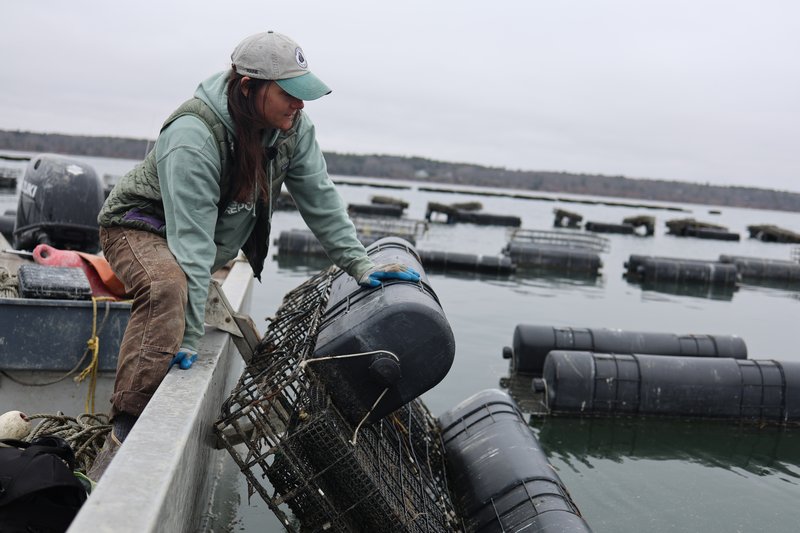
Alongside that determination, the mentorship she received throughout the program from Mere Point Oyster Company Farm Manager Derek Devereaux was also a big part of her positive experience with the program. Now working as colleagues at the farm, it was Derek who taught her lessons that she carries forward in her day-to-day work — lessons that she hopes to pass on to incoming apprentices.
“Farmers are just as much scientists as anybody in a lab,” she said. “Every time you have an oyster in your hand, it’s an opportunity to see how it's doing. Listen to your oysters. They'll tell you what they need. Every single time you're handling them, you should be gaining information. You can't just put your head down and swipe through the product.”
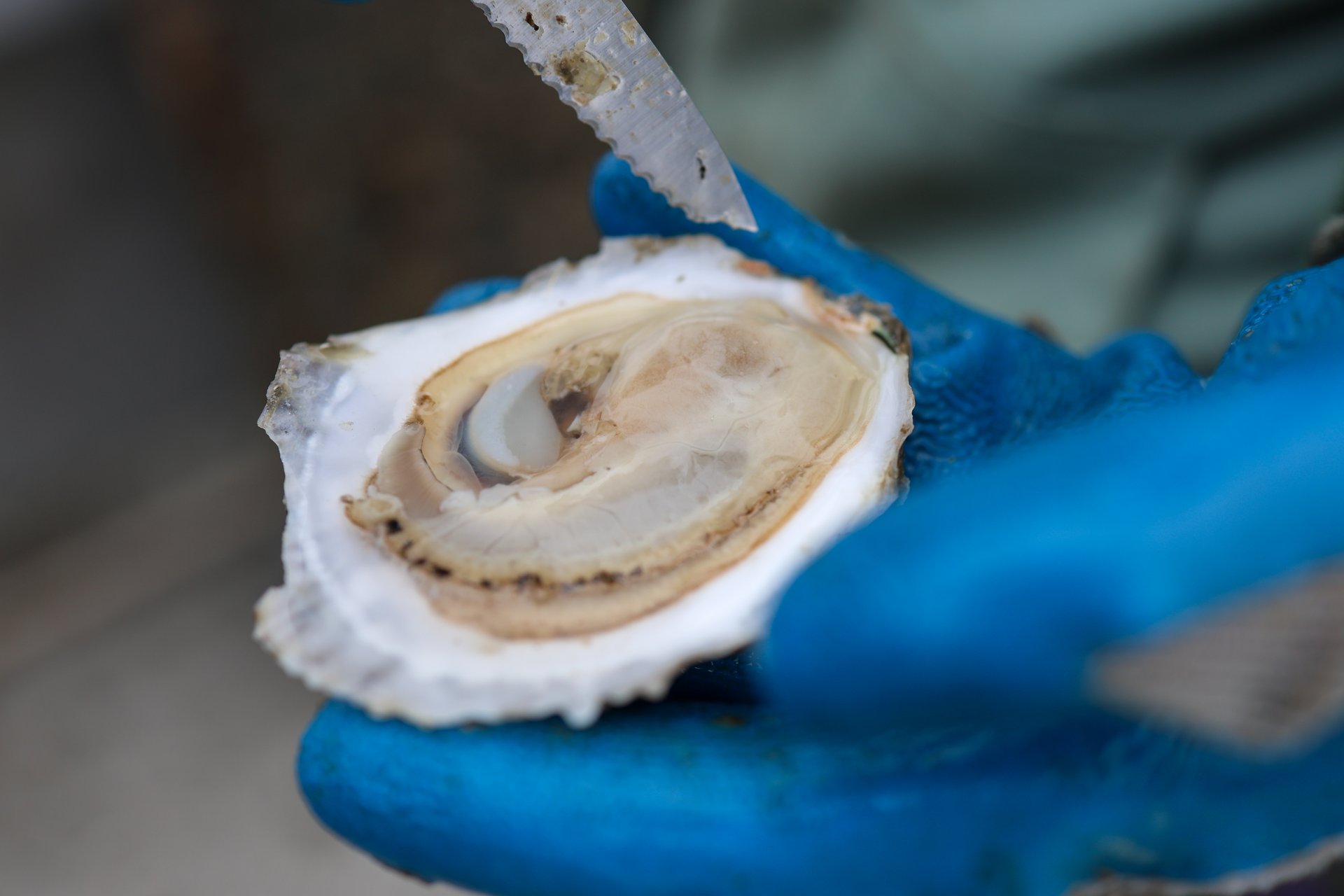
Moving from an apprentice to a farm manager, and now entering the mentoring phase herself, Kat reflected on how the apprenticeship program sets apprentices up for success.
“The really cool thing about doing the apprenticeship is that you get to start from the bottom and work your way up. It's kind of like a restaurant owner who started in the dish pit — they're going to know every single job, and they're probably going to be a really, really great restaurant owner,” Kat said. “You can build your way up, and you can stay in farming, but then there's also tons of opportunities in the aquaculture industry that this apprenticeship opens the door for.”
It’s the way that this program strengthens the industry from the ground up that has Kat so excited to continue being a part of it as a mentor. And it’s a big reason why Kat is urging the continued support of the program.
When you support programs like this one, you're not just supporting a farmer. You are helping an entire industry grow from the bottom up.
Kat Lipp General Manager Mere Point Oyster Company
As the apprenticeship program enters its fourth year, Kat is especially grateful to the program designers who took a chance on her and the first cohort. That gratitude is rooted in the opportunity itself, but also in how responsive the program has been to those early participants. Organizers actively incorporated feedback from the original group, shaping future iterations of the program. Kat has since heard from apprentices in later cohorts that many of those changes have become some of the most valuable parts of the experience, including farm tours, which give apprentices glimpses into the inner workings of aquaculture farms throughout the state.
Kat’s story is a robust example of how this apprenticeship program has a positive influence on apprentices, the host farms, and the aquaculture industry writ large.
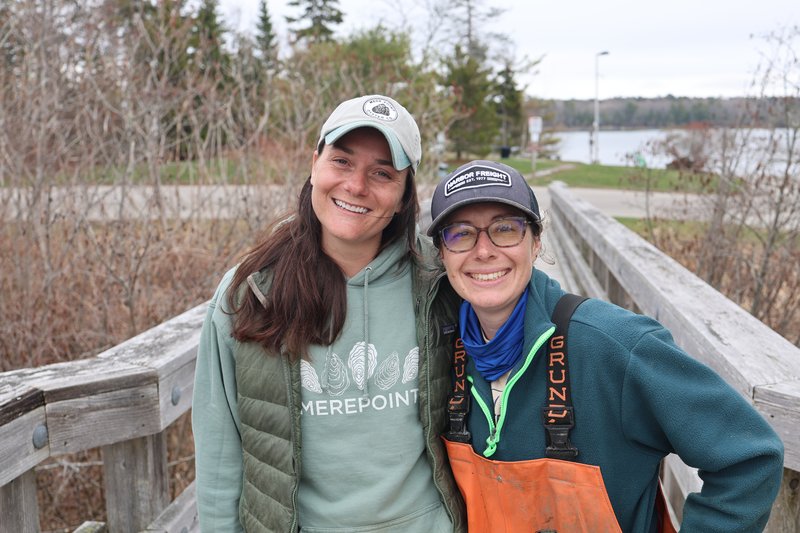
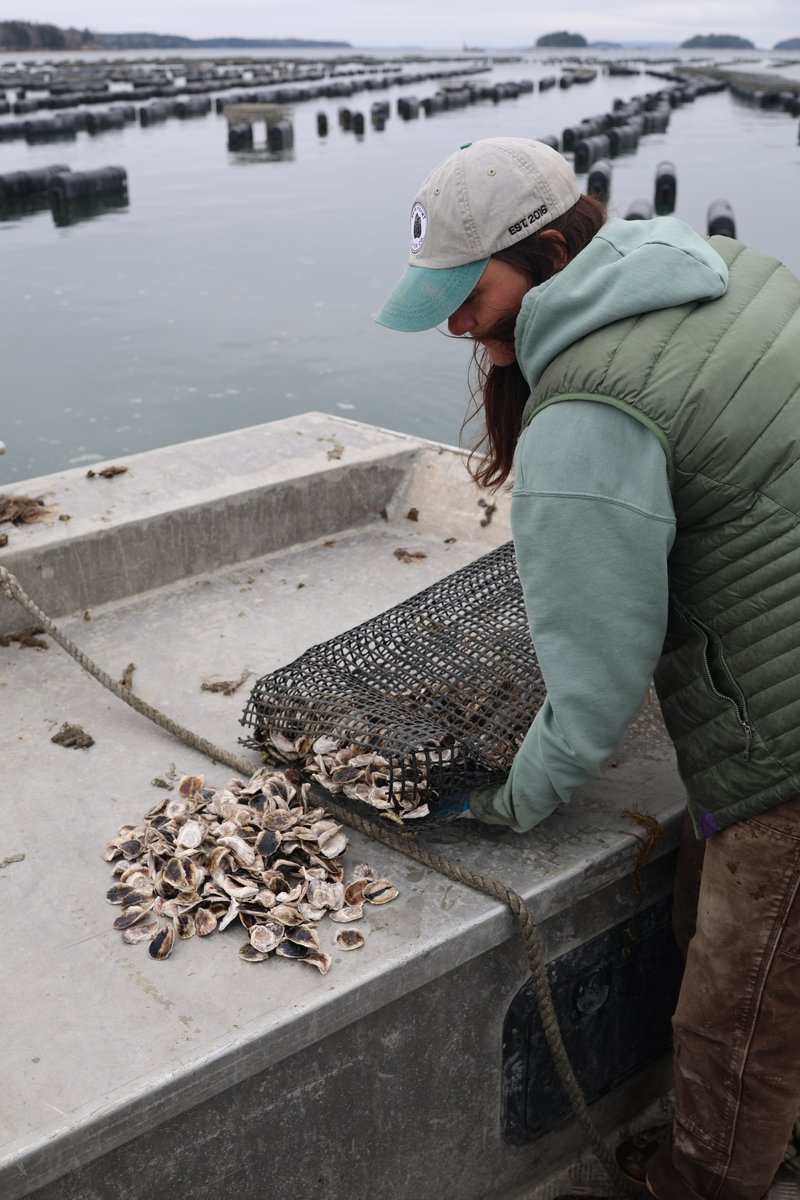
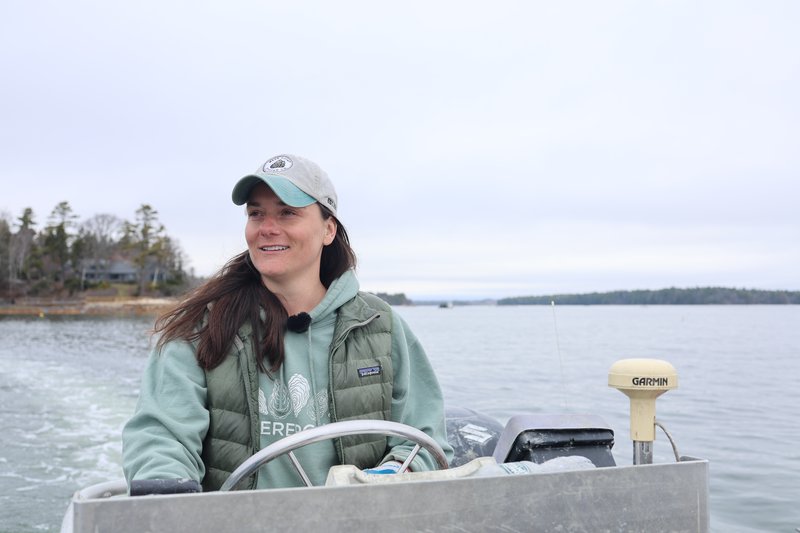
The work still involves long muddy days, repetitive, exhausting tasks, and paying close attention to what’s in front of you. But what started as a chance to get her foot in the door now has Kat leading a team, mentoring new apprentices, and helping shape the future of a growing industry.
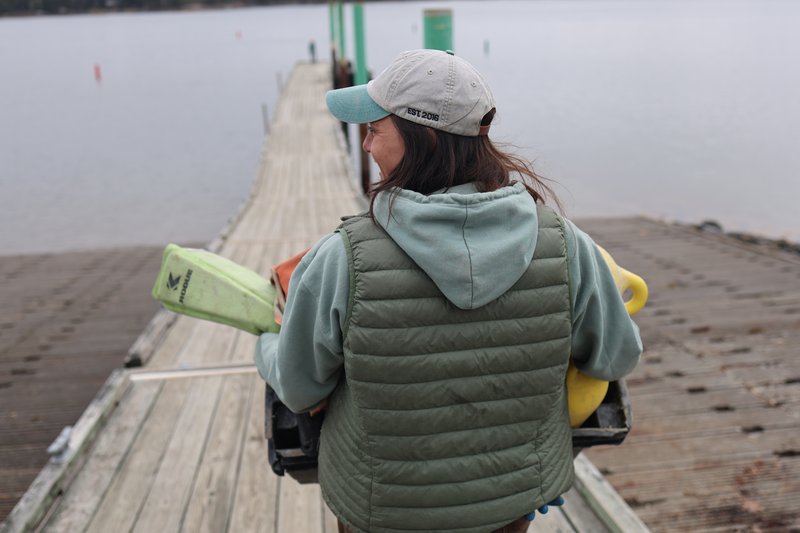
And more often than not, the work takes her back to her oyster boat, Merekat (named after the farm, and not Kat, yet), with a big smile on her face and her hair blowing in the wind, reinvigorated by the work, the people, and the sense of identity she’s found on the water as a girl from Chagrin Falls, Ohio.